Month: December 2025
Cube Trainer 3×3 Cube 3D | Cube Master
3×3 Cube 3D Visualiser
Watch the 3D cube rotate as each move is played. Drag to rotate the cube, use the arrows for single steps, and follow the tutorial below.
3×3 Beginner Tutorial
Follow the steps, learn the algorithms, and use the 3D cube above to see each move.
Tip: when you change step, the visual algorithm for that step is loaded above. Use the arrows to move one turn at a time, or press Play to watch the full sequence.
Cube Master Leaderboard
 Cube Master Leaderboard
Show off your best times and climb the Cube Master rankings.
2x2 Leaderboard
No approved solves yet for 2x2. Be the first to submit!
3x3 Leaderboard
No approved solves yet for 3x3. Be the first to submit!
4x4 Leaderboard
No approved solves yet for 4x4. Be the first to submit!
You need an account to submit your solve and appear on the leaderboard.
Cube Tutorial 3×3 Cube Master
3×3 Cube Visualiser
Watch the faces light up as each move is played. Use this with the tutorial below.
3×3 Beginner Tutorial
Follow the steps, learn the algorithms, and use the visualiser above to see each move.
Tip: when you change step, the algorithm box above is updated. Just press Play to see that step.
Find Your Cube
Find Your Perfect Cube
Answer a few quick questions and we’ll match you with the best cubes from CubeMaster.
What Is Speedcubing? A Beginner’s Guide to the World of Fast Rubik’s Cube Solving
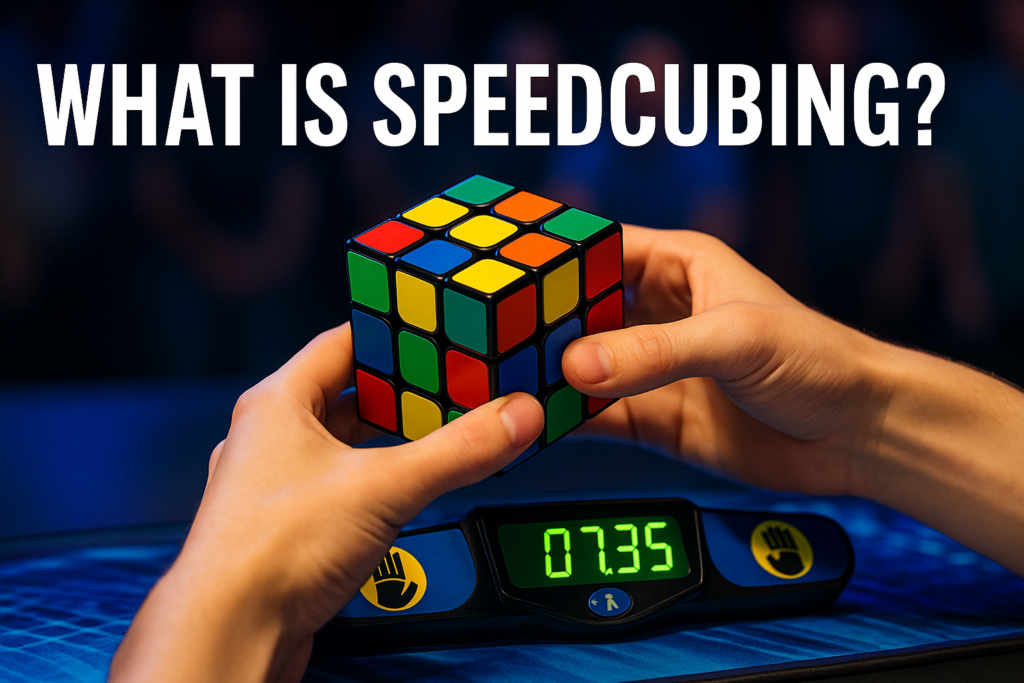
If you’ve ever seen someone solve a Rubik’s Cube in under 10 seconds and thought, “How is that even possible?” – welcome to speedcubing.
In this guide, we’ll explain what speedcubing is, how it works, the gear people use (including brands like GAN and MoYu), and how you can get started with your first speed cube.
What Is Speedcubing?
Speedcubing is the sport of solving twisty puzzles – most famously the 3×3 Rubik’s Cube – as fast as possible.
Speedcubers:
- Use advanced solving methods (like CFOP, Roux, or ZZ).
- Practise finger tricks to turn the cube quickly and efficiently.
- Rely on high-performance speed cubes from specialist brands such as GAN, MoYu, QiYi, YJ and others.
What started as a casual toy in the 1980s has grown into a global competitive scene, with official competitions, world rankings, and solves now regularly under 5 seconds for top cubers.
How Speedcubing Competitions Work
Most official competitions are run under the World Cube Association (WCA). Events include not just 3×3, but also:
- 2×2, 4×4, 5×5, 6×6, 7×7 cubes
- One-handed solving
- Blindfolded solving
- Puzzles like Pyraminx, Megaminx, Skewb and more
In a standard 3×3 event:
- The cube is scrambled using a randomised algorithm.
- The competitor inspects the cube for up to 15 seconds.
- When ready, they start the Stackmat timer, solve the cube, then stop the timer by placing both hands back on the pad.
Times are usually recorded as:
- Single – your best solve.
- Average of 5 – 5 solves, with best and worst removed and the remaining three averaged.
Why Regular Rubik’s Cubes Aren’t Great for Speedcubing
The classic Rubik’s Cube you find in supermarkets is great for casual play, but it’s not designed for high-speed solving.
Typical problems with standard cubes:
- Stiff turning – you have to use your whole hand instead of quick finger tricks.
- Lock-ups – pieces catch when layers aren’t perfectly aligned.
- Popping – pieces can fly out if you turn too fast.
- No way to adjust tension or customise the feel.
That’s where modern speed cubes come in.
What Makes a Cube a “Speedcube”?
Speed cubes are engineered specifically for fast, controlled turning.
1. Smooth, Low-Friction Mechanism
Internal pieces are rounded and designed to glide past each other, giving you:
- Less friction
- Faster turning
- Fewer lock-ups
2. Corner-Cutting
Corner-cutting means the cube can still complete a turn even if the layers aren’t perfectly aligned. Good speed cubes can cut large angles, which is essential when you’re spamming turns at 8–10 moves per second.
3. Adjustable Tensions & Springs
Most modern cubes let you:
- Tighten or loosen the cube with a screwdriver or adjustment tool.
- Fine-tune the feel for either speed, control or a balance of both.
4. Magnetic Positioning
Almost all serious speedcubers now use magnetic cubes:
- Small magnets inside the pieces help each turn “snap” into place.
- This makes the cube feel more stable at high speeds.
- Brands like GAN and MoYu offer cubes with adjustable magnet strength, so you can dial in exactly how strong you want the clicky feel to be.
Top Speedcubing Brands: GAN, MoYu and More
If you’re new to speedcubing, the brand names alone can be confusing. Here’s a quick overview of the big names you’ll see on Cube Master.
GAN – Premium, High-Tech Speedcubes
GAN is known for:
- Ultra-lightweight, high-end flagships.
- Innovative features like numerical IPG tensioning, adjustable magnets, and honeycomb surfaces for smoother lubrication.
- Popular models among serious speedcubers, especially for 3×3 main cubes.
GAN cubes are ideal if you want a top-of-the-line, competition-ready feel right out of the box.
MoYu – Performance and Value Across the Range
MoYu is another giant in the speedcube world, with famous sub-brands such as WeiLong and RS lines.
MoYu offers:
- Flagship cubes that rival the best on the market.
- Excellent mid-range options that are perfect for beginners who want pro-level performance without paying flagship prices.
- A huge variety of puzzles beyond 3×3: 4×4, 5×5, Pyraminx, Skewb, Megaminx and more.
If you’re building a collection of speedcubes and twisty puzzles, MoYu is a fantastic place to start.
Other Notable Brands
While GAN and MoYu are two of the biggest names, you’ll also encounter:
- QiYi / X-Man Design – known for excellent value and strong competition cubes in multiple events.
- YJ / MGC line – very popular in 4×4, 5×5 and other big cubes.
- Dayan – an early pioneer in speedcubing, still loved by some cubers.
At Cube Master, we focus on stocking proven cubes from these top brands so you’re never stuck with a slow, outdated puzzle.
How Do People Get So Fast? (Methods & Training)
Speedcubers don’t just turn the cube randomly. They use efficient solving methods with carefully learned algorithms.
CFOP (Fridrich Method)
The most popular method for 3×3 speedsolving is CFOP:
- Cross – solve a cross on one face.
- F2L (First Two Layers) – pair up corner + edge pieces and insert them together.
- OLL (Orientation of the Last Layer) – orient all last-layer pieces so the final face is one colour.
- PLL (Permutation of the Last Layer) – move those pieces into their correct positions.
Top cubers may know hundreds of algorithms, but beginners can start with a subset and gradually add more.
Roux, ZZ and Other Methods
Some speedcubers prefer:
- Roux – a block-building method with fewer rotations.
- ZZ – optimises edge orientation early for smoother turning later.
Each method has its own fanbase and pros/cons, but all benefit from a good speedcube that can handle fast, precise turning.
Getting Started with Speedcubing
If you’re ready to move from casual turning to real speedcubing, here’s a simple step-by-step plan:
- Get a proper speed cube
- Choose a magnetic 3×3 from brands like GAN or MoYu.
- Look for terms like “magnetic”, “stickerless”, “corner-cutting”.
- Learn a beginner’s method
- Start with a simple layer-by-layer approach.
- Once you can reliably solve, progress to CFOP.
- Use online resources
- YouTube tutorials, cube timer apps, and algorithm trainers make learning easier than ever.
- Practise regularly
- Track your times.
- Aim to cut your average from 1 minute, to 30 seconds, to under 20, and beyond.
- Join the community
- Visit local or regional competitions.
- Even if you’re not “fast” yet, WCA events are beginner-friendly and a great way to meet other cubers.
Why Buy Your Speedcubes from Cube Master?
At Cube Master, we’re not just another toy shop – we’re focused on high-performance puzzles:
- Curated selection of GAN, MoYu and other top brands.
- Cubes chosen specifically for speedcubers, from beginner-friendly to flagship models.
- A growing range of puzzle cubes, lubricants, timers and accessories so you can build your full speedcubing setup in one place.
Whether you’re learning your first solve or chasing a new personal best, the right cube makes all the difference.
Final Thoughts: Speedcubing Is for Everyone
Speedcubing is the perfect mix of:
- Brain training
- Hand-eye coordination
- Community and competition
All you need to get started is:
- One good speedcube, and
- A little bit of curiosity.
Ready to try it yourself?
Explore our range of GAN, MoYu and other pro-grade speed cubes at Cube Master and start mastering every move today.
History of the Rubik’s Cube and Modern Puzzle Cubes
From Magic Cube to Speedcubing: The Fascinating History of the Rubik’s Cube and Modern Puzzle Cubes
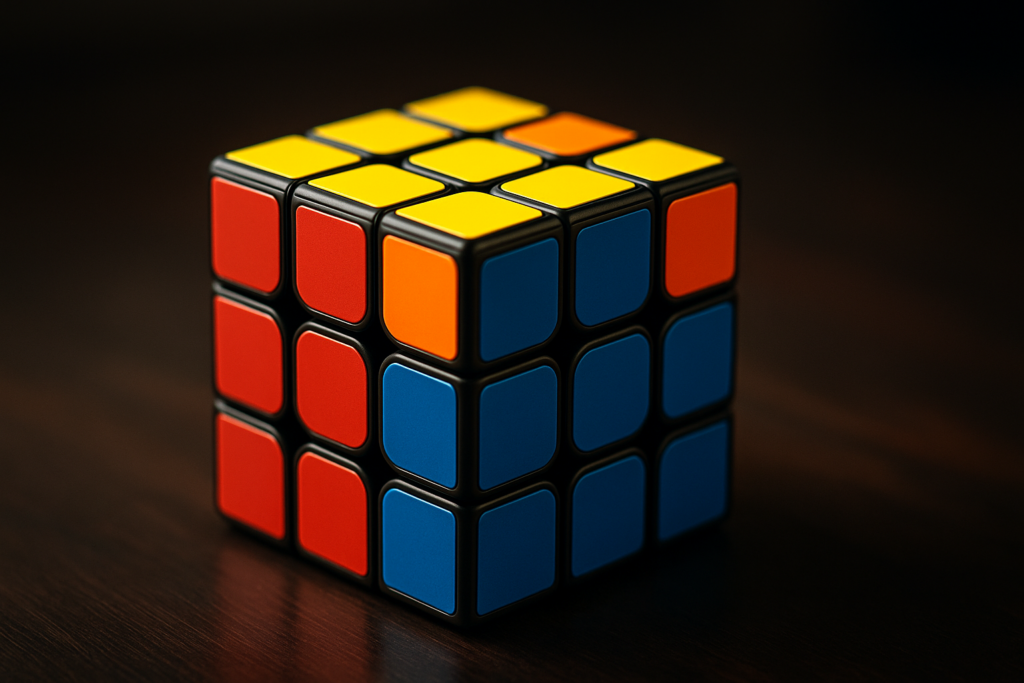
If you’ve ever picked up a Rubik’s Cube, scrambled it, and thought “how on earth do people solve this in seconds?”, you’re not alone. Today, speed cubes and puzzle cubes are a global obsession, with world-class speedcubers turning these colourful plastic puzzles into a serious sport.
In this article, we’ll dive into the history of cubes – from Ernő Rubik’s original invention, to the 80s craze, the birth of speedcubing, and the high-tech magnetic speed cubes that brands like Cube Master specialise in today.
1. Before the Rubik’s Cube: Why Humans Love Cubes
Long before the Rubik’s Cube arrived, cubes already played a starring role in mathematics, architecture, art and games.
- In geometry, the cube (or regular hexahedron) is one of the Platonic solids, studied since ancient Greece.
- In architecture and art, cubes symbolise stability, structure and order.
- Dice – one of humanity’s oldest gaming tools – are simply numbered cubes.
So when a Hungarian architect set out to create a 3D teaching tool in the 1970s, it’s fitting that he landed on a cube.
2. The Birth of the Magic Cube (1974–1977)
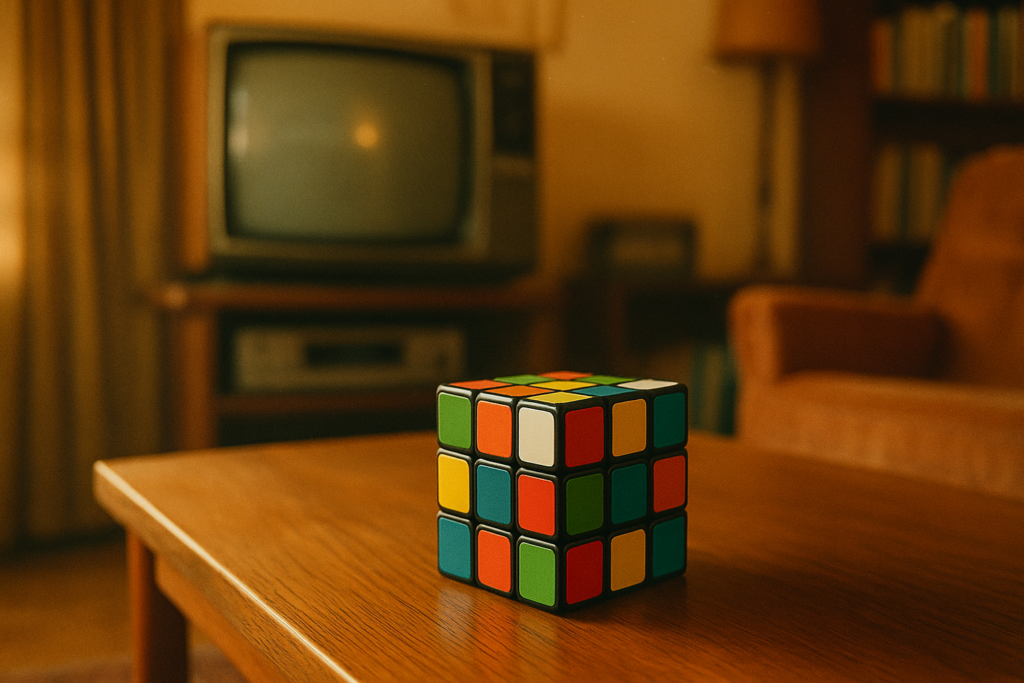
The story really begins in Budapest, Hungary in the spring of 1974. Ernő Rubik, a young architect and lecturer, was experimenting with ways to demonstrate three-dimensional movement to his students. He wanted to design an object whose parts could move independently without the whole thing falling apart.
After months of tinkering with wood, paper, rubber bands and paper clips, he created a 3×3×3 cube with rotating rows. Only when he scrambled it did he realise he had accidentally invented a puzzle – one that took him about a month to solve himself.
He called it the “Bűvös kocka”, or Magic Cube.
Key early milestones:
- 1975 – Rubik applies for a Hungarian patent for the Magic Cube; it’s granted in 1975/77 depending on the stage of the process.
- 1977 – The first test batches go on sale in a few Budapest toy shops, where it slowly builds a local following.
At this point, almost no one could have predicted that this modest teaching tool would become the best-selling puzzle toy of all time.
3. Going Global: The Rubik’s Cube Takes Over the World (1979–1983)
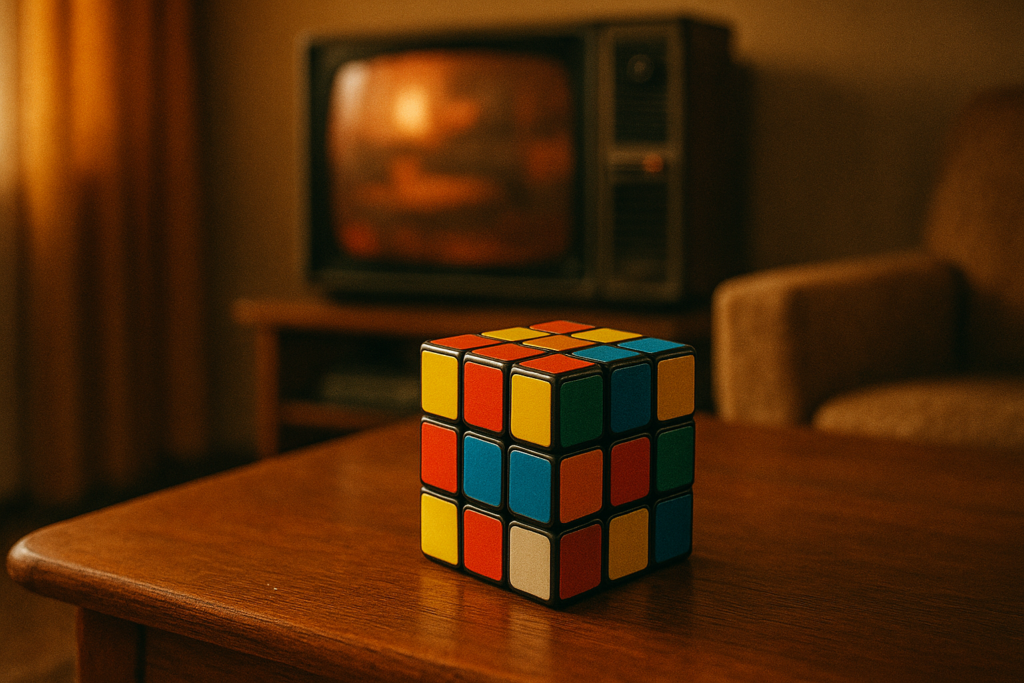
The Magic Cube’s global journey began when businessmen Tibor Laczi and Tom Kremer spotted its potential. They helped license it to Ideal Toy Corp, who wanted a more marketable name. In 1980, the Magic Cube was officially re-branded as the Rubik’s Cube, putting its creator front and centre.
From there, things exploded:
- 1980–1981 – Rubik’s Cube wins UK Toy of the Year and sells around 100 million units in its first three years.
- Early 1980s – The Cube becomes a global fad; it appears in magazines, TV shows and pop culture everywhere.
The rubik’s craze was so intense that books like “You Can Do the Cube” sold over a million copies, just by teaching people how to solve it.
4. The First Official Competitions and the “Cubic Winter”
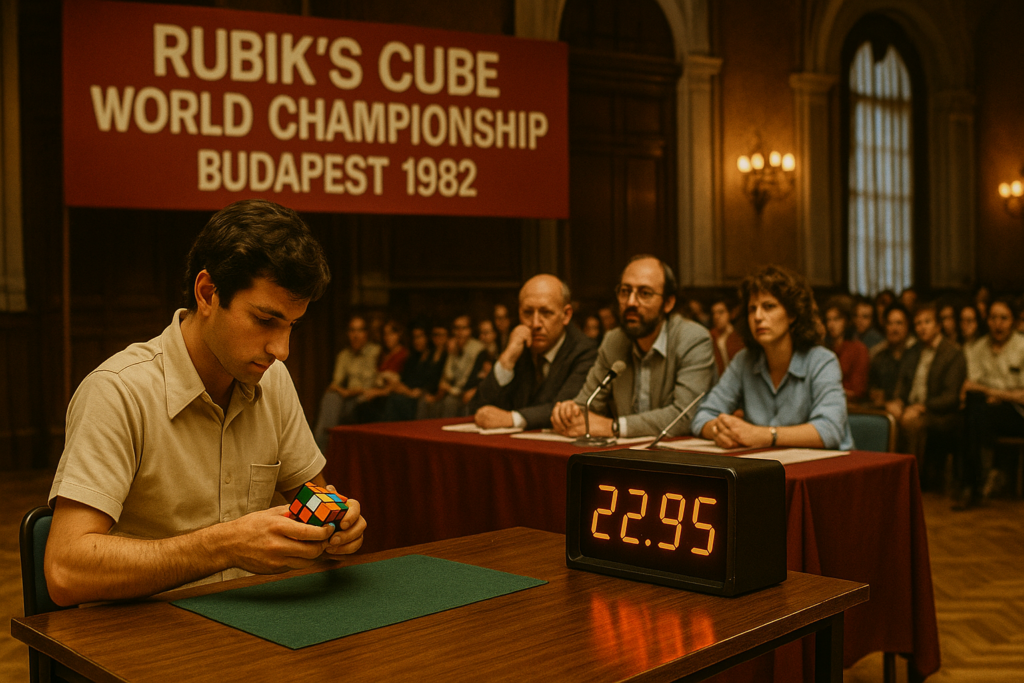
When you put millions of puzzles into people’s hands, a key question quickly follows: “Who’s the fastest?”
- 1982 – The first ever Rubik’s Cube World Championship is held in Budapest, Rubik’s home city. The winning time is 22.95 seconds, which was mind-blowing at the time.
As with many crazes, interest dipped by the mid-1980s. New toys arrived, and Rubik’s Cube sales slowed. For a while, speedsolving survived mostly in small local groups and early online communities.
Cubers sometimes call this period the “cubic winter” – the puzzle never disappeared, but it was far from mainstream.
5. The Internet Era and the Birth of Modern Speedcubing
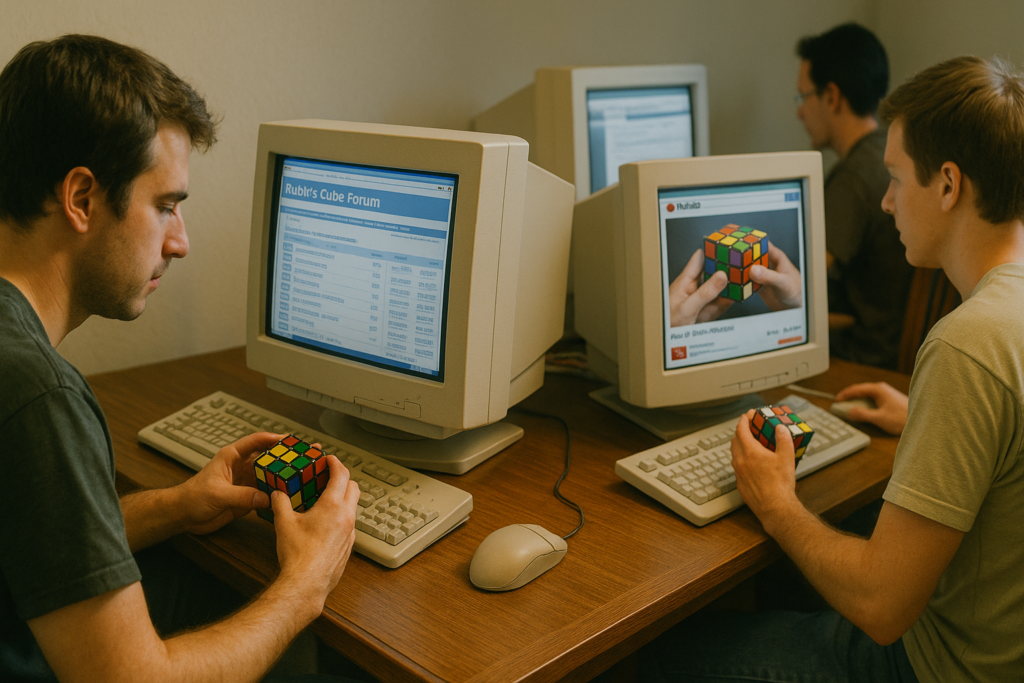
In the late 1990s and early 2000s, something big changed: the Internet gave cubers a place to meet, share methods and compare times. Online forums, websites and early YouTube tutorials helped create a new wave of solvers who treated cubing more like a sport than a toy.
To keep up with this growing community – and to make competitions fair – the World Cube Association (WCA) was founded in 2004 by Ron van Bruchem and Tyson Mao.
The WCA:
- Creates official rules and regulations.
- Keeps a global database of competition results.
- Oversees thousands of competitions in countries all over the world.
As of 2025, more than 250,000+ people have competed in WCA events worldwide, with over 14,000 competitions held.
6. From Clicky Bricks to High-Tech Speed Cubes
The original Rubik’s Cube was never designed for insane solving speeds. It was stiff, lock-prone, and unforgiving if you tried to turn too fast. Modern speed cubes – like the ones we sell at Cube Master – are completely different beasts.
Key innovations in speedcube design
Over the past two decades, puzzle manufacturers and cube designers have introduced a series of upgrades:
- Improved internal mechanisms
- Rounded pieces and better plastics reduce friction and lock-ups.
- Internal “tracks” and feet designs improve corner-cutting, making it easier to turn even when layers are slightly misaligned.
- Tensions and springs
- Adjustable screws allow cubers to tune the feel of their cube – looser for faster turning, tighter for accuracy.
- Lubrication
- Special silicone lubes make cubes feel smoother, faster, or more controllable depending on the formula.
- Magnetic cubes
- Around 2016, cube modders and stores started adding tiny magnets inside the pieces to help layers snap precisely into place.
- In January 2017, GAN released the GAN 356 Air UM, one of the first widely available factory-magnetised cubes, produced in collaboration with TheCubicle.
- Today, magnets are so standard that most serious speed cubes are magnetic out of the box.
These innovations make a huge difference: a modern flagship 3×3 turns so quickly and smoothly that older cubes feel almost broken in comparison.
7. World Records: How Fast Are the Best Speedcubers?
So where has all this technology – and training – got us?
From that 22.95-second world-championship solve in 1982, times have dropped dramatically. Thanks to better cubes, advanced solving methods and thousands of hours of practice, we’re now in the 3-second era.
As of mid-2025:
- The 3×3 single world record (fastest single solve) is 3.05 seconds, set by Xuanyi Geng of China on 13 April 2025 at Shenyang Spring 2025.
- The 3×3 average world record (average of 5 solves, dropping best and worst) is 3.90 seconds, set by Yiheng Wang of China on 26 July 2025 at Taizhou Open 2025.
There are also records for:
- One-handed solving
- Blindfolded solving
- Bigger cubes like 4×4, 5×5, 7×7
- Non-cubic “twisty puzzles” like Pyraminx, Megaminx and Skewb
Every time a new record drops, it pushes more cubers to upgrade their hardware and sharpen their skills – which is exactly where high-performance speed cubes come in.
8. Beyond 3×3: The Rise of Puzzle Cubes and Twisty Puzzles
While the classic 3×3 Rubik’s Cube will always be iconic, the broader world of puzzle cubes is huge:
- 2×2 “Pocket Cubes” – simpler to scramble, trickier than they look.
- 4×4, 5×5 and up – larger cubes with extra layers and parity problems.
- Shape mods – cubes that look like skulls, barrels or geometric art but still scramble and solve like cubes.
- Non-cubic twisty puzzles – like Pyraminx (pyramid-shaped) or Megaminx (dodecahedron-shaped), which add variety and new solving challenges.
For a brand like Cube Master, offering a full range of twisty puzzles means catering to:
- Complete beginners who want an easy first cube.
- Hobby solvers who like a challenge on the coffee table.
- Serious speedcubers chasing personal bests and WCA competition results.
9. Why Cubes Still Matter in a Digital World
In an age of smartphones and short attention spans, it’s easy to assume that a simple plastic cube would feel outdated. Instead, the Rubik’s Cube and modern speed cubes have become more relevant than ever:
- Brain training & STEM skills Solving cubes builds spatial reasoning, pattern recognition and problem-solving – all key skills for STEM subjects.
- Mindfulness and focus Many cubers describe solving as a calming ritual that keeps their hands busy and mind engaged, away from screens.
- Community and competition WCA competitions, online leaderboards and local cube clubs give people a fun, inclusive way to meet others and improve together.
- Collecting & customisation With so many colours, finishes, magnet strengths and limited editions, speed cubes have become collectible hardware, not just puzzles.
This is why modern, specialised cube shops – like the one you’re building with Cube Master – are thriving. People don’t just want a random cube; they want the right cube for their level, style and goals.
10. From Rubik’s Workshop to Cube Master: The Story Continues
The journey from Ernő Rubik’s wooden prototype in 1974 to today’s magnetic, ultra-smooth speed cubes is an amazing example of how a simple idea can evolve into a worldwide culture.
- The Magic Cube became the Rubik’s Cube.
- A toy craze became a global sport.
- Stiff, clicky 80s cubes evolved into precision-engineered speed cubes with magnets, adjustable tensions and buttery turns.
At Cube Master, we stand on the shoulders of this history:
- We celebrate the classic 3×3 that started it all.
- We embrace the latest speedcube technology to help solvers break their PBs.
- And we stock an ever-growing collection of puzzle cubes and twisty puzzles for every kind of cuber – from curious beginners to hardcore competitors.
Whether you’re reliving childhood memories, learning your first solve, or shaving milliseconds off your average, there has never been a better time to dive into the world of cubes.